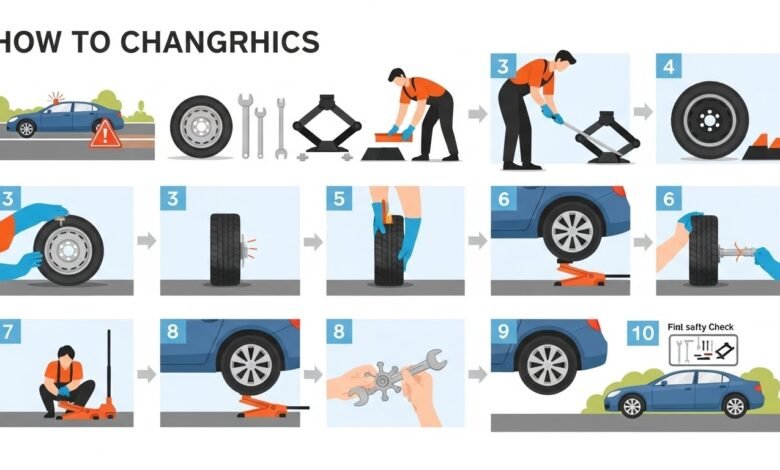
Your tire goes flat. The car leans like it just gave up on life. You look around and wonder if today is the day you finally learn how to change a tire—or the day you admit defeat and call for help. I’ve stood on the roadside with cars flying past, thinking, “This should not feel this dramatic.” Good news: you can change a tire in 15 minutes or less, and I promise it’s easier than it looks.
I’ve changed tires in parking lots, driveways, and once in the rain while questioning my life choices. Every time, the same lesson sticks: speed comes from preparation, not panic. Let’s talk through this like friends, not like a boring instruction manual.
Why Knowing How to Change a Tire Still Matters
Cars keep getting smarter, but tires still go flat. Tech hasn’t fixed nails, potholes, or bad luck yet.
Independence Beats Waiting Around
When you know how to change a tire, you:
Skip long roadside assistance waits
Avoid surprise towing costs
Stay in control of your schedule
Ever waited an hour just for someone to jack up your car? Yeah, hard pass.
Confidence Changes Everything
I notice my stress drop instantly when I know I can handle the problem. Confidence turns a flat tire into a small inconvenience, not a meltdown.
What You Need Before You Start
You can’t change a tire fast if you hunt for tools like a scavenger hunt. Preparation saves minutes.
Essential Tire-Changing Tools
Make sure your car carries:
Spare tire (inflated, please)
Jack
Lug wrench
Wheel wedges or heavy objects
FYI, I once found my spare completely flat. Check yours today, not later.
Optional Gear That Saves Time
I also recommend:
Gloves for grip
Flashlight for night changes
Knee pad or folded jacket
Comfort speeds things up. Trust me.
Step One: Get to a Safe Spot
Safety matters more than speed. Always.
Choose the Right Location
Pull over to:
Flat ground
A well-lit area
Away from traffic
I always turn on hazard lights immediately. Visibility keeps you safe and calm.
Secure the Car
Before touching anything:
Set the parking brake
Place wedges behind tires
Turn off the engine
Ever seen a car roll during a tire change? I have, and it ruins your day fast.
Step Two: Loosen the Lug Nuts First
This step trips people up all the time.
Break the Resistance Early
Use the lug wrench to loosen the lug nuts before lifting the car. You don’t remove them yet.
Why does this matter? Because spinning wheels don’t like force. The ground gives you leverage.
Use Smart Body Weight
I press down with my foot if needed. I stay controlled, not reckless. Lug nuts fight back sometimes.
Step Three: Jack the Car Up Properly
This step feels intimidating, but it’s straightforward.
Find the Jack Point
Check your car manual for:
Reinforced jack points
Proper placement
I always double-check this spot. Guessing here causes damage.
Lift With Confidence
Crank the jack until the tire lifts off the ground. I stop once I see clear space under the tire.
No need to go sky-high. You only need enough clearance to remove the wheel.
Step Four: Remove the Flat Tire
Now things move fast.
Take Off the Lug Nuts
Finish removing the loosened lug nuts. I place them in a pocket or cup so they don’t roll away.
Lost lug nuts slow everything down. Been there.
Pull the Tire Straight Off
Grip the tire with both hands and pull it toward you. The wheel comes off cleanly when you stay steady.
I always roll the flat tire under the car as a backup safety move. Old habit, solid logic.
Step Five: Mount the Spare Tire
This step feels satisfying.
Line It Up Right
Lift the spare and align it with the wheel bolts. I push gently until it slides on.
If it doesn’t fit easily, I adjust instead of forcing it.
Hand-Tighten the Lug Nuts
Screw the lug nuts on by hand first. I tighten them evenly in a star pattern.
Even pressure keeps the wheel seated correctly.
Step Six: Lower the Car and Tighten Everything
You’re almost done.
Bring the Car Back Down
Lower the jack slowly until the tire touches the ground. I stop once the tire carries weight but the jack still supports it.
This position helps with tightening.
Tighten Lug Nuts Fully
Use the wrench to tighten lug nuts in a star pattern. I apply firm pressure, not superhero strength.
Over-tightening causes problems later. Balance matters.
Step Seven: Final Checks Before Driving
Don’t rush this part.
Double-Check Your Work
I always:
Confirm all lug nuts feel tight
Remove tools from the road
Store the flat tire securely
Ever driven off with tools behind your car? Not a great look :/
Drive Carefully on the Spare
Spare tires usually:
Limit speed to 50 mph
Reduce handling
Require quick replacement
IMO, spares act like temporary favors. Replace them fast.
How to Change a Tire in 15 Minutes or Less: Time Breakdown
Speed comes from knowing the flow.
Realistic Time Expectations
Here’s how the time usually breaks down:
Safety setup: 3 minutes
Loosening and jacking: 4 minutes
Tire swap: 4 minutes
Tightening and cleanup: 4 minutes
Practice once, and the process clicks. Muscle memory saves time.
Common Mistakes That Waste Time
I’ve made every mistake at least once.
Mistakes to Avoid
Watch out for:
Forgetting to loosen lug nuts early
Jacking on unstable ground
Losing lug nuts in grass or gravel
These errors slow everything down and spike stress levels.
Why Practice Makes This Easy
Changing a tire once changes everything.
Practice at Home First
I practiced in my driveway on a calm afternoon. That decision paid off on the roadside later.
Practice removes fear. Familiarity builds speed.
Should You Use Roadside Assistance Instead?
Sometimes, yes.
When Calling for Help Makes Sense
I still call for help when:
Traffic feels dangerous
Weather turns awful
Physical limits get in the way
Smart choices matter more than pride.
Manual vs. Power Tools: My Honest Take
People ask about electric impact wrenches all the time.
Manual Tools Win for Reliability
Manual tools:
Never run out of battery
Work in all conditions
Cost less
Power tools feel nice, but I trust simple gear more when it counts.
How This Skill Builds Everyday Confidence
Changing a tire teaches more than mechanics.
Small Wins Matter
This skill:
Builds self-reliance
Reduces anxiety
Saves money
Ever notice how one win changes your whole day?
Quick Recap Before You Go
Let’s lock this in.
Key Takeaways
Remember to:
Prepare tools ahead of time
Loosen lug nuts before lifting
Work safely and calmly
Practice once at home
You really can change a tire in 15 minutes or less with the right mindset.